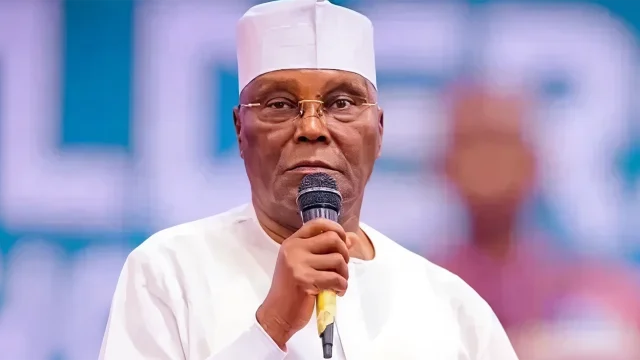
Rice, Spaghetti can’t save you’ — Atiku Camp knocks Tinubu administration
Nigeria’s democracy is being systematically weakened by what the opposition describes as a dangerous consolidation of power under President Bola Ahmed Tinubu.
In a strongly worded statement issued by Phrank Shaibu, Senior Special Assistant on Public Communication to former Vice President Atiku Abubakar, the administration was accused of deliberately shrinking Nigeria’s democratic space.
Shaibu argued that with over 30 state governors reportedly aligning with the ruling party, expectations would be for greater political openness and healthy competition. Instead, he claimed Nigeria is witnessing what he described as growing fear of opposition and electoral contest.
According to him, the government already enjoys significant institutional advantages, including control of the security architecture, incumbency power, access to national resources, and influence across key institutions, yet still demonstrates what he called “anxiety about the opposition.”
He said: “Beyond coercing governors and political heavyweights into its fold, the Tinubu administration already commands the instruments of state power… yet there remains a visible anxiety about the opposition and, more importantly, about the Nigerian people.”
Shaibu dismissed what he described as “stomach infrastructure politics,” saying temporary relief measures such as distribution of rice and spaghetti cannot replace public trust or guarantee electoral legitimacy.
“Bags of rice, spaghetti, and indomie may offer temporary relief, but they cannot secure legitimacy at the ballot box,” he stated, adding that attempts to rely on such gestures would ultimately fail.
He further alleged that opposition parties have been destabilised by internal crises allegedly worsened by judicial inconsistencies and conflicting court interpretations.
The statement also raised concerns over electoral processes, alleging that administrative decisions have increasingly created perceptions of bias in favour of the ruling party.
Shaibu further criticised what he described as the growing use of detention orders against opposition figures, warning that such actions risk undermining democratic freedoms.
He named several political figures—including Rotimi Amaechi, Peter Obi, Rabiu Kwankwaso, Abubakar Malami, Nasir El-Rufai, David Mark, and Rauf Aregbesola—as figures operating within what he described as a narrowing political environment.
He warned that a democracy where one party dominates while weakening opposition structures risks sliding into what he described as “a one-party state in all but name.”
Shaibu reaffirmed Atiku Abubakar’s commitment to a democratic system where leadership is determined by the will of the people, not institutional pressure or alleged manipulation of the political process.
“As 2027 approaches, the question is no longer abstract: why is a government with such vast control still afraid of a free and fair election?” he asked.
The statement concluded by urging Nigerians to remain alert to what he described as the stakes for the country’s democratic future, insisting that power must remain accountable and competition must be preserved.
Tags:
No tags
Related Posts


Loading...