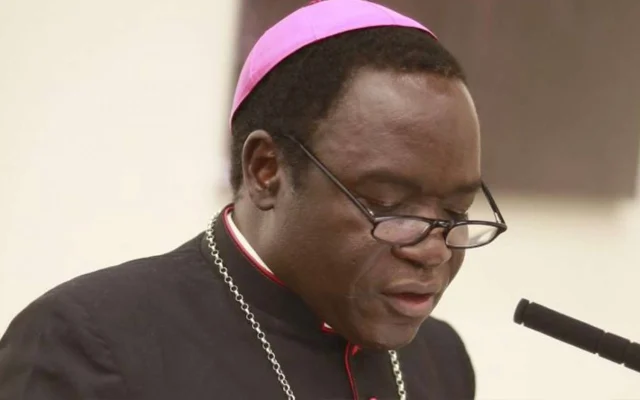
Kukah tells Nigerians to claim their rights, confront Injustice
The Catholic Bishop of Sokoto Diocese Bishop Matthew Kukah, has urged Nigerians to take responsibility for confronting injustice by understanding and claiming the rights already available to them.
Speaking at a Northwest regional conference on women and security yesterday in Abuja, Kukah said persistent injustice and inequality in the country are not necessarily due to the absence of opportunities or constitutional provisions, but largely because many citizens lack the awareness and capacity to access them.
The regional conference also coincided with the close out ceremony of a project tagged ‘Strengthening inclusive peace building and access to justice in the northwest’ implemented by Global Rights and the Rule of Law Empowerment Initiative also known as Partners West Africa Nigeria, founded by the United Kingdom Foreign Commonwealth Development Office (FCDO).
Drawing parallels with older democracies, Kukah noted that countries such as the United States of America and the United Kingdom who have struggled for centuries to attain justice and equality.
He said, “Progress takes time, and even nations we admire are still struggling with the question of justice. Nigerians must avoid being overly harsh on themselves while remaining committed to improvement.”
He observed that religion has historically been used both as a tool of oppression and a source of liberation, and emphasised that Nigerians should not wait for permission from religious, political or traditional leaders to pursue justice and opportunity.
“This country belongs to all of us. We must develop a greater sense of urgency about what is right,” he said.
He added that justice should not remain an abstract concept but must be reflected in everyday life through fairness, dignity and equal access to opportunities.
The Deputy High Commissioner United Kingdom Mrs. Gill Lever, in her remarks, stated that the UK, through its Integrated Security Fund, was supporting Partners West Africa, Nigeria and Global Rights in implementing a truly community centred and gender responsive approach to peace and security in Katsina, Kebbi, Kano, and Sokoto
states.
She pointed out that the Northwest continue to face complex challenges, including intercommunal tensions, banditry, limited access to justice, and deeply rooted sociocultural norms that disproportionately affect women and girls. .
Tags:
No tags
Related Posts

Loading...