
Into the Heart of Ona-Ara: A Journalist’s Eye-Opening Journey Through Ending Open Defecation By Olamide Adeniji
The road into Ona-ara begins like any other rural passage in southwestern Nigeria-dusty, winding and deceptively calm. But for anyone tasked with pushing the boundaries of public health reform, the landscape quickly transforms into an arena of grit, resilience and relentless learning.
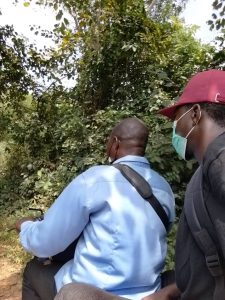
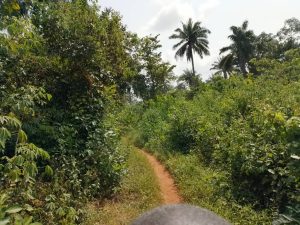
As a member of the Oyo State Task Group on Sanitation (STGS) for the Open Defecation Free (ODF) programme sponsored by the United Nations Children’s Fund, UNICEF, I entered Ona-ara Local government area expecting a technical assignment. What I found was a story-one carved into the red earth, the narrow paths, the resilient huts, the people and eventually, into my own heart.
As a journalist, serving as a member of the Task Group on Ending Open Defecation in Oyo State, my experience has been both eye-opening and deeply transformative. It took me beyond newsroom deadlines and into the heart of communities where sanitation challenges are a daily reality. On the field, I witnessed firsthand the conditions that fuel open defecation- ranging from cultural norms to lack of basic facilities-and I saw how education, advocacy and community engagement can spark real behavioural change. Being part of the task group allowed me to merge journalism with development work, documenting stories that often go unheard while helping to shape conversations around public health, dignity and rural development. It strengthened my belief that the media is not just a watchdog but also a catalyst for social progress, especially when we step out of our comfort zones and contribute directly to life-changing interventions.
A quick explanation of the Open Defecation Free (ODF) certification process, based on national and global Community-Led Total Sanitation (CLTS) standards used in Nigeria:
The certification of a community or local government as Open Defecation Free (ODF) is a systematic, multi-level process designed to ensure that open defecation has truly stopped and that improved sanitation practices are being sustained. The process typically involves three major stages: triggering, verification, and certification, with each stage carried out by different teams to ensure credibility.
The Local Government Task Group on Sanitation (LTGS) visits the community. They check every household to confirm that toilets are built, functional, and being used.
The process involves:
1. Triggering and behaviour change
2. LGA verification
3. State Certification
4. National verification
5. Certification and celebration
6. Ongoing monitoring and sustainability
It is built on community ownership, transparency, and a deep commitment to public health and dignity for all.
I commend the dedicated members of the Local Government Task Group for their unwavering commitment in the open defecation verification exercise. Led by the Director, Mrs. Popoola, their resilience, teamwork, and professionalism were evident in the long days spent traversing difficult terrains, engaging diverse communities, and upholding the standards required for an accurate and credible assessment. Their effort has not only driven the ODF campaign forward but has also set an inspiring benchmark for service, collaboration, and grassroots impact. Well done, and thank you for your remarkable contributions to this critical cause. You may wish to check my previous report titled “Environmental Officers Recount how Residents Chased Verification Teams With Charms, Gun During ODF Exercises.”
It is easy to speak about sanitation from conference podiums and offices filled with policy documents. It is another thing entirely to walk through the villages, where open defecation has been woven into the fabric of life for generations. The contrast between theory and lived experience was sharp from my first day on the field.
Ona-Ara Local Government Area is one of the 33 LGAs in Oyo State, Nigeria. It is located in the southeastern part of the state and shares boundaries with Oluyole, Egbeda, and Ibadan South-East LGAs. The headquarters of the local government is situated in Akanran, a semi-urban community that serves as the administrative and cultural centre of the area.
Ona-Ara is characterized by a blend of rural and peri-urban settlements. The area is dominated by farmlands, thick vegetation, numerous villages, and growing residential pockets influenced by the expansion of Ibadan city. The terrain includes narrow footpaths, bush roads, streams and farming routes that connect different communities.
The LGA comprises Eleven (11) political wards, made up of towns, villages, hamlets and farm settlements such as Gbedun, Olunloyo, Akanran, Olorunda, Ogbere, and Jegede, among others.
Ona-Ara is home to a diverse population of farmers, artisans, traders, and civil servants. The LGA is largely Yoruba, with deep-rooted traditions and communal lifestyles typical of southwestern Nigeria. Many communities still have strong extended family structures and compound-based settlement patterns.
Agriculture is the backbone of the local economy. Major crops cultivated include cassava, maize, vegetables, yam, plantain, cocoa, and oil palm. The area also supports livestock rearing, small-scale trading, and cottage industries. Proximity to Ibadan has gradually increased commercial activity and real estate development in some parts of the LGA.
While some parts enjoy basic infrastructure, many communities remain underserved, with limited access to good roads, potable water, electricity, and healthcare. Many villages are only accessible by motorcycles or long treks. Sanitation and hygiene initiatives such as the Open Defecation Free (ODF) campaign have played a major role in improving community health.
Ona-ara’s terrain is a character of its own. Its remote villages sit behind thick vegetation, farmlands and footpaths that tell the stories of those who have used them for decades. Most of these communities lie far beyond the reach of cars, forcing us to rely on motorcycles—machines that rattled, jumped and slid their way through the unforgiving landscape.
I remember the first fall vividly. The bike skidded on a slippery incline, sending both my local guard, and myself tumbling into a mix of dust and leaves. It was the kind of fall that knocks the wind out of your lungs and your pride at the same time. But when you are on a mission that affects public health, you dust yourself off and climb again. It was not the last fall.
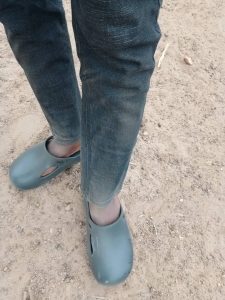
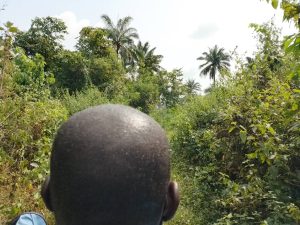
On days when the bikes could go no further, our legs became our only means of transport. We trekked for kilometres—past streams, anthills, corn patches, rubber trees and thick bushes that enveloped the footpaths. The sun did not negotiate; it beat down with full authority. Harmattan winds showed no mercy either, kicking up dust that coated our clothes and clung to our skin like a second layer.
Those treks taught me patience, endurance and the humility of understanding how far people travel daily to fetch water, visit farms or access basic services.
Where Tradition Meets Transformation
Beyond the physical terrain lay another kind of challenge—tradition. In many of the remote communities, open defecation was not seen as a problem. It was simply life.
People went to the bush because their fathers had gone to the bush. Children grew up seeing it as normal. The bush was seen as free, natural and convenient. Toilets, on the other hand, were a luxury—something for “big men,” not for households built from mud and raffia.
This mindset explains why some communities initially greeted us with suspicion. A few residents mistook us for tax officials or government agents seeking to impose penalties. Others simply didn’t want to discuss sanitation with strangers.
But something remarkable had been happening over the years-community-led sensitization. By the time we arrived for certification, many households had already begun constructing latrines using cheaper materials, such as Sato pans. Not because they were forced to, but because they had seen firsthand the link between open defecation, diarrheal diseases, cholera outbreaks and under-five mortality.
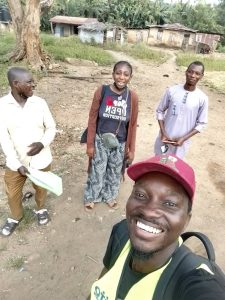
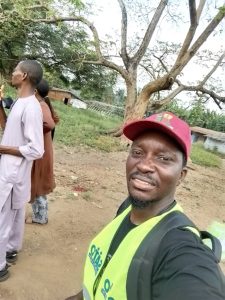
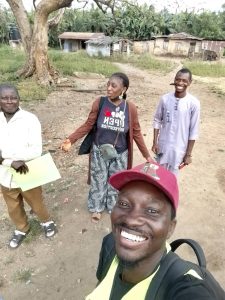

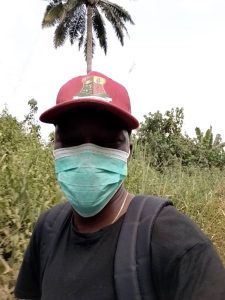
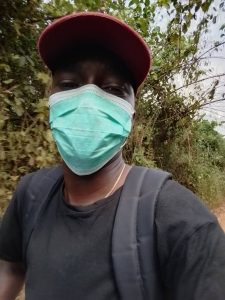
Mothers shared stories of how their children were falling sick less frequently. Young men talked about the dignity of having a private space. Community leaders proudly walked us through compounds to show their improvements. The shift was slow but unmistakable.
A Personal Detour: Finding My Roots
Then came December 6, 2025 the journey shifted from professional to deeply personal. Our route for the certification exercise took us into Gbedun area, Ward 10-and then, suddenly, into Jegede village.
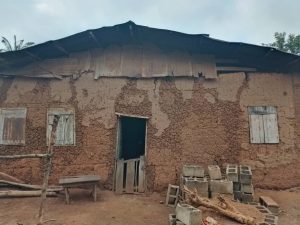
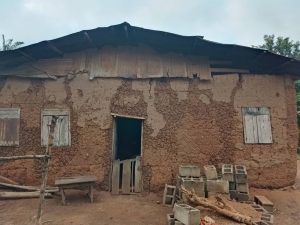
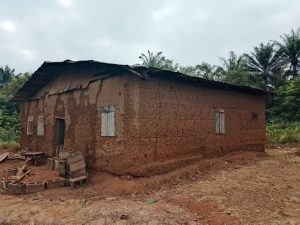
At first, the name echoed in my mind like a familiar song. Then, as landmarks began to appear-the bend in the footpath, the tall trees, the pattern of the huts—it struck me: I was walking into my own ancestral home.
The realization washed over me with a mixture of shock, pride and emotion. This was not just another village on the checklist. It was my village.
This was where my family roots lay—where stories I had heard had been formed.
When I reached our family compound, it felt like stepping into a long-forgotten chapter of my own life. The compound had aged, yet it held the unmistakable essence of familiarity. My relatives stared in disbelief before excitement filled their faces. Their joy was contagious. They told me about my late grandfather, Ayo Adeniji who played football in his early days for the country.
They introduced me to improvements they had made—cleaner surroundings, a newly built latrine, better waste disposal practices. Being there, not as a visitor but as someone contributing to their progress, was a deeply moving experience.
Seeing my own people embrace change reinforced what the ODF movement represents. Beyond sanitation, it is about dignity, health, environmental preservation and intergenerational growth. It is about ensuring that children grow up in safer spaces and communities thrive without preventable diseases.
Across Ona-Ara, similar stories were emerging. Villages once plagued by open defecation were adopting healthier habits. Women talked proudly about privacy. Elders applauded the shift. Youths embraced the idea of living in cleaner spaces.
The journey also laid bare the immense dedication of field workers, volunteers, local leaders and households who, despite economic and cultural challenges, chose progress.
When I look back on Ona-ara’s ODF journey, I see more than a professional assignment completed. I see red dust on my boots. I see the bike falls. I see long treks across lonely paths. I see faces-some welcoming, some suspicious, all human.
Most importantly, I see my own village, standing proudly in the landscape of change.
Becoming part of a mission that ends open defecation is not just about certifying structures. It is about connecting with people, histories, cultures and, in my case, my own origins.
It is a reminder that public service, at its core, is a return to humanity. Sometimes, it even leads you back home.
May Ona-ara succeed;
May Oyo State succeed;
May Nigeria succeed.
Tags:
No tags
Related Posts

At Ologuneru, it was a battle of wits and wills over Circular Road corridor By Sulaimon Olanrewaju
12/3/2025

When Tension Thawed at Makinde’s Interface With Circular Road Stakeholders By Aisha Alimi
11/29/2025

How Ibadan Became PDP’s Land of Rebirth By Sulaimon Olanrewaju
11/17/2025

PDP Convention: Celebrating Makinde, Pride of the West, Hope of the Nation
11/15/2025
Loading...