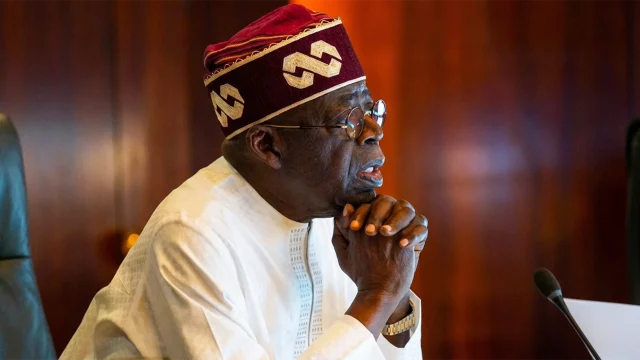
Electoral Bill 2026: How president Tinubu’s prompt assent may shape 2027 elections
President Bola Ahmed Tinubu’s prompt assent to the amended Electoral Bill threw some light to issues that will shape the 2027 general election. Despite calls on the President to withhold his signature like former president Muhammadu Buhari did, on the spur of conditional adoption of real-time transmission of polling unit results, a lot of changes in the election environment and polity will be witnessed as the bill became law in record time, LEO SOBECHI writes.
With the new Electoral Act coming into force, a lot is expected from politicians, political parties, the electorate and the Independent National Electoral Commission (INEC) to make the best out of the new provisions.
Enlightenment is key; because apart from the factor of real-time transmission of Polling Unit results to the INEC Result Viewing (IReV) portal, there are some unique provisions and missing links that would demand further review since nation building is a work in progress.
As Civil Society Organisations (CSOs) continue to agonise and organise over the retention of Form EC8 as the basic election result collation document, there are some salient provisions that deserve positive reflection.
One of such provisions in the now Electoral Act 2026 is the removal of indirect primary election, which extinguishes the role of middle men and corruption in candidate nomination process by political parties. What this stipulation and Tinubu’s prompt assent conveys is that the Executive and Legislature remained on the same page all through the period the amendment lasted.
From his brief days as a Senator and his two terms as Governor of Lagos State, the President had been on the vanguard of agitation for electoral reforms. With his inspiration and support, the Coalition of Democrats for Electoral Reforms (CODER), which had Ayo Opadokun as convener, suggested far-reaching electoral solutions, including putting power back to party faithful as a way of assuring party supremacy.
The Special Adviser to the President on Media and Public Communications, Sunday Dare, seemed to be employing diplomatese when he disclosed that the President would be guided by prevailing realities to “take a measured decision on the electronic transmission of election results.”
While noting that President Tinubu is a committed democrat, Dare had during his appearance on Arise Television, stated: “I can assure you that President Bola Ahmed Tinubu, a renowned democrat, will do what is right, but it will not be in isolation from the realities of our country…There’s no 100 per cent real-time transmission anywhere. Are you telling me that this country, as it is, is networked enough to have a 100 per cent electronic process?”
However, those who recalled the President’s stance on electronic transmission of poll results in the lead up to the 2015 general election claimed that he wanted to enjoy to the fullest the benefits of incumbency powers available to his office.
The National Publicity Secretary of the Peoples Democratic Party (PDP), which was dethroned in 2015, Ini Emeobong, recalled vividly that “evidence exists to show that Asiwaju Tinubu’s APC demanded electronic voting in 2015, claiming it was long overdue.”
He claimed that the President and the APC were afraid of mass rejection, which he said awaits them at the polls, adding that that was why they could not accede to the popular demand for real-time transmission of results.
But, in his remarks while appending his signature to the amended bill, President Tinubu noted that he followed the debates on the amendment bill by the federal lawmakers, stressing that “the essence of democracy is to have very solid brainstorming discussions committed to national development, nation building and the stability of the nation.”
While underplaying the controversies trailing the passage of the bill by the two chambers of the National Assembly, the President stated: “It is time that we have confidence in our system. No matter how good the system is, it is managed by the people, promoted by the people and the people finalise the results.
“And, when you look at the crux of various arguments, maybe Nigerians should question our broadband capability. How technically sound are we today? How technically sound will we be tomorrow in answering the call, whether in real time or not?
“And, as long as you appear personally as a manual voter in any polling booth, a ballot paper is given to you manually. You decide in a corner and fingerprint the person you choose. You cast your vote without hindrance or interference. Ballots are subsequently counted manually. It’s just the arithmetic accuracy that is entered into it from easy thinking. It is still manual, essentially.”
Although the President raised concerns about glitches and human interference with technology through hacking, it was obvious that the Presidency and the APC-dominated National Assembly worked together to push a common a purpose clause, which has continued to elicit critical reviews by the stakeholders.
For instance, former Resident Electoral Commissioner (REC) for Akwa Ibom State, Mr. Mike Igini, said that the conditional premise for electronic transmission will open the Electoral Officers to great risk of bodily harm.
Alluding to what transpired in Lagos, Rivers and other states during the 2023 elections, Igini disclosed that exactly 98 per cent of Nigeria’s electoral area is adequately covered by network, stressing that the Bimodal Voter Accreditation System (BVAS) machines were configured to operate under 2G and 3G networks.
On the flipside, what the new Electoral Act has unwittingly done is to exterminate the spectre of voter apathy. This is because the likelihood of manipulation and ballot heist is reduced drastically when 90 per cent voter turnout is achieved.
This perspective comes as another positive aspect of the 2026 Electoral Act, even as it demands proactive strategies by the political parties to ensure that they get out the voters. Further, the other inimical innovation in electoral malfeasance called vote buying could be also reduced.
If the words of the Senate President, Godswill Akpabio, during the presidential assent are anything to go by, what popular participation would do about the Act is that citizen inclusion, which the IReV portal aims to achieve, would be easily garnered.
The Senate President had explained that the lawmakers “have ensured that we provide a lot of clauses in the amendment that will enable you (INEC) to conduct free and fair elections in Nigeria that will be acceptable to the international community and all Nigerians, meet the yearnings and aspirations of all Nigerians as democrats.”
Like the late Sam Mbakwe, a former Governor of Imo State, observed about democratic participation, “the rat does not tamper with the food of anybody that remains awake.” Political parties have work to do in mobilising voters to come out and vote, thereby seeing to it that whatever that will be done at the polling units are not only acceptable to them, but also reflect their choice.
Legal Flop
Despite the positive sides to the Electoral Act 2026, some stakeholders have faulted the ‘hurried’ assent by the President, saying that the chief law officer of the country, the Attorney General of the Federation (AGF), Prince Fagbemi, should have taken time to read through.
For instance, the Yoruba Union pointed out that the caveat supplied by the lawmakers on the issue of real-time transmission was an implausible legal maxim. Ìgbìnmó Májékóbájé Ilé-Yorùbá faulted President Tinubu for signing into law an Electoral Act (Amendment) bill that contains “a controversial provision, which permits manual transmission of election results, where electronic transmission fails.”
While describing the clause as a dangerous window for manipulation, the convener, Olusola Badero, in a statement sent to media organisations by its Home Director, Princess Balogun, faulted the haste with which the President appended his signature, saying that both the Senate President, Akpabio and Speaker, Tajudeen Abass, railroaded the process to satisfy the whims of the Presidency.
“In an era when elections across the globe are increasingly driven by technology to ensure transparency, Nigerian politicians still cling to old methods just to manipulate their way back into power because the people are fed up with them,” the Yoruba Union declared.
The group noted that having become an incumbent, President Tinubu seems to be desperate to take over power in 2027, regretting that “he no longer has regard for Nigerians’ requests and aspirations.”
But instead of the flurry of attacks on the Presidency and the National Assembly, the critical areas of the election management, which should engage public attention, is security and logistic deployment. It amounts to defeatism if the international community is made to see Nigeria’s electoral system as the exclusive preserve of those in power instead of exploring areas of collective responsibility.
As the country heads to another historic poll in 2027, one irrefutable truism is that there is much work to be done by all stakeholders and on all sides. Like the American abolitionist, Wendell Phillips, observed, “Eternal vigilance is the price of liberty.”
Tags:
No tags
Related Posts

Loading...